How big should your emergency fund be? A simple way to find your number
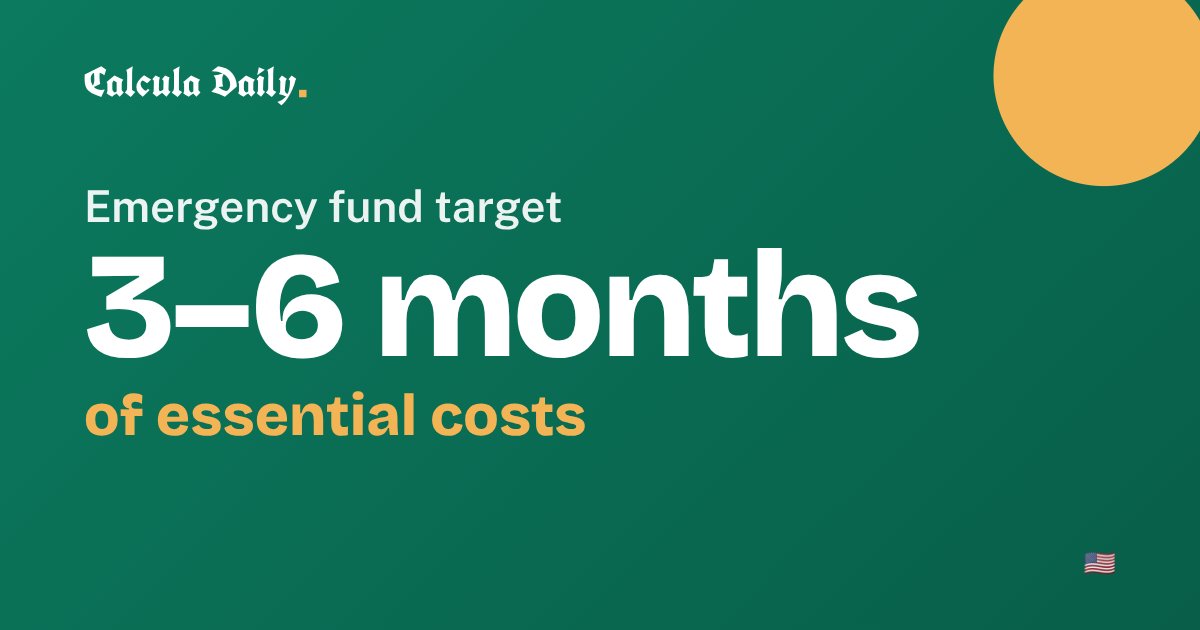
Three to six months of essential costs is the usual target. How to work out your own number, where to keep it and how long it takes to build, with examples.
An emergency fund is money set aside for the things you cannot plan for: a job loss, a medical bill, a car repair. It is the difference between a bad month and a new credit card balance. The question most people ask is how much is enough.
Start with essential costs, not your salary
Your target is based on what you would still have to pay if your income stopped: housing, utilities, groceries, insurance, transportation, minimum debt payments and childcare. Leave out the things you would cut in an emergency, like dining out, travel and most subscriptions.
Then multiply by the number of months you want to cover:
| Essential costs per month | 3 months | 6 months | 12 months |
|---|---|---|---|
| $2,000 | $6,000 | $12,000 | $24,000 |
| $3,000 | $9,000 | $18,000 | $36,000 |
| $4,500 | $13,500 | $27,000 | $54,000 |
 Read alsoWorking on Thanksgiving: is holiday pay required, and when do you get overtime?
Three months or twelve?
- Around 3 months: two stable incomes, in-demand skills, little debt.
- Around 6 months: the usual target for most households.
- 6 to 12 months: one income for the household, self-employed or commission-based pay, health issues, or an industry with frequent layoffs.
If the full number feels out of reach, start with a starter fund of $500 to $1,000. It covers the most common surprises and keeps you off your credit card while you build the rest.
How long will it take?
Divide what is left to save by what you can put aside each month. Saving $300 a month, a $9,000 target takes 30 months from zero, or 20 months if you already have $3,000. The emergency fund calculator does the math for you, and the 50/30/20 budget calculator shows a realistic monthly amount: about 20% of take-home pay for savings and debt.
Where to keep it
- Safe: a savings or money market deposit account covered by FDIC (banks) or NCUA (credit unions) insurance.
- Easy to reach: you should be able to move the money within a day or two.
- Separate: not in your everyday checking account, so you are not tempted to spend it.
- Earning interest: high-yield savings accounts pay much more than a standard savings account. Compare the APY before you open one.
Avoid keeping your emergency fund in stocks: a market drop can happen exactly when you lose your job.
Emergency fund or paying off debt first?
Most people do both: build a starter fund first, then focus on high-interest debt, then finish the full emergency fund. Without any cushion, the next surprise goes straight back on the card. See how fast you can clear a balance with the credit card payoff calculator.
- Consumer Financial Protection Bureau, An essential guide to building an emergency fund
- FDIC, Deposit insurance
Spotted a mistake or have a question? Write to the newsroom through the contact page. We fix it and log the change at the end of the story.
Stories written with AI assistance, with every figure checked against the site calculator and the official rules cited.