The 50/30/20 budget rule: how to split your paycheck, with examples from $3,000 to $8,000
How the 50/30/20 rule works, what counts as needs and wants, and what to do when rent eats more than half of your pay. Tables for common take-home pays.
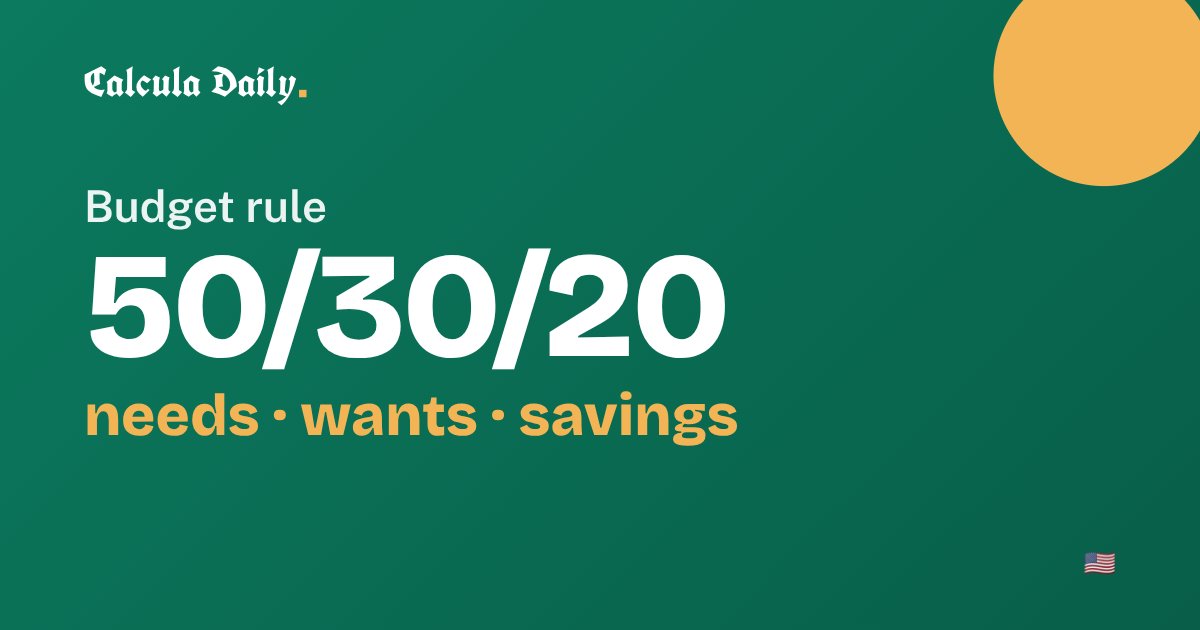
The 50/30/20 rule is one of the simplest ways to build a budget. Instead of tracking dozens of categories, you split your pay into three buckets. It will not fit every household perfectly, but it gives you a quick check on whether your spending is in a healthy range.
How the rule works
- 50% for needs: things you must pay to live and work. Rent or mortgage, utilities, groceries, insurance, transportation to work, minimum debt payments and childcare.
- 30% for wants: things you choose. Eating out, streaming, travel, hobbies, shopping beyond the basics, upgrades.
- 20% for savings and debt: emergency fund, retirement contributions you make on your own, investing and any debt payments above the minimum.
The split uses your take-home pay: the amount that lands in your bank account after federal and state income tax, Social Security, Medicare and other deductions. If your 401(k) contribution comes out of your paycheck before you see it, you can count it toward the 20%.
 Read alsoWorking on Thanksgiving: is holiday pay required, and when do you get overtime?
Examples by monthly take-home pay
| Take-home pay | Needs (50%) | Wants (30%) | Savings (20%) |
|---|---|---|---|
| $3,000 | $1,500 | $900 | $600 |
| $4,000 | $2,000 | $1,200 | $800 |
| $5,000 | $2,500 | $1,500 | $1,000 |
| $6,000 | $3,000 | $1,800 | $1,200 |
| $8,000 | $4,000 | $2,400 | $1,600 |
Not sure what your take-home pay is? Start with the paycheck calculator, then put the result in the 50/30/20 budget calculator.
What if rent takes more than half?
In many cities, housing alone can take 35% to 50% of take-home pay, so “needs” easily go over 50%. That does not mean the rule is useless. It tells you where the room has to come from:
- Trim wants first. If needs are 60%, a 25% wants budget and 15% savings is still a solid plan.
- Look at the big fixed costs. Insurance quotes, phone plans and subscriptions are often easier to cut than groceries.
- Grow into 20%. Start with what you can, even 5%, and raise it each time you get a raise.
Where to put the 20%
A common order of priorities:
- A starter emergency fund, then 3 to 6 months of needs. The emergency fund calculator shows your target and how long it takes.
- Enough in your 401(k) to get the full employer match.
- High-interest debt such as credit cards. Check how fast you can clear it with the credit card payoff calculator.
- More retirement saving and other goals. For 2027 the 401(k) limit rises to $25,500, see the new limits.
Is 50/30/20 right for you?
The rule works best as a starting point. If you have high-interest debt, you may want to put more than 20% toward it for a while. If you are saving for a home, you may shift some of the 30% into savings. The point is to give every dollar a job and to check, once a month, whether your real spending matches the plan.
Spotted a mistake or have a question? Write to the newsroom through the contact page. We fix it and log the change at the end of the story.
Stories written with AI assistance, with every figure checked against the site calculator and the official rules cited.