£50,000 after tax in 2026/27: £3,293.30 a month take-home
On a £50,000 salary you pay £7,486.00 Income Tax and £2,994.40 National Insurance in 2026/27, and take home £39,519.60 a year. Full workings, pension and nearby salaries.
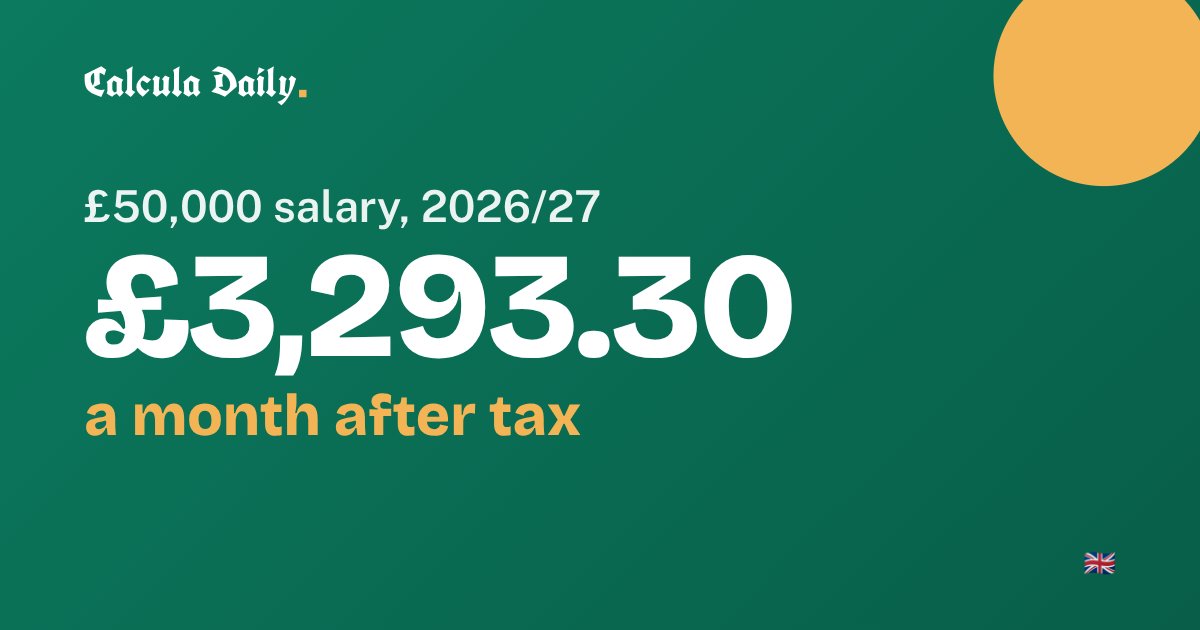
Here is exactly what a £50,000 salary leaves after tax in the 2026/27 tax year (6 April 2026 to 5 April 2027), for someone in England, Wales or Northern Ireland with tax code 1257L, no student loan and no pension deductions.
The answer in one table
| Per year | Per month | Per week | |
|---|---|---|---|
| Gross salary | £50,000.00 | £4,166.67 | £961.54 |
| Income Tax | −£7,486.00 | −£623.83 | −£143.96 |
| National Insurance | −£2,994.40 | −£249.53 | −£57.58 |
| Take-home pay | £39,519.60 | £3,293.30 | £759.99 |
In total, about 21.0% of the salary goes in tax and National Insurance. On a 37.5-hour week, £50,000 is about £25.64 an hour before tax.
 Read alsoOff sick this winter? Statutory Sick Pay now starts on day one
How the numbers are worked out
Income Tax. The first £12,570 is your Personal Allowance and is tax-free. That leaves £50,000 − £12,570 = £37,430, all inside the 20% basic rate band (which runs up to £50,270). 20% of £37,430 = £7,486.00.
National Insurance. Employees pay 8% on earnings between £12,570 and £50,270. 8% of £37,430 = £2,994.40.
Take-home. £50,000 − £7,486.00 − £2,994.40 = £39,519.60, or £3,293.30 a month.
With a 5% workplace pension
If 5% of your salary (£2,500) goes into a pension before tax under a "net pay" arrangement, your Income Tax falls to £6,986.00. National Insurance stays at £2,994.40. Take-home becomes £37,519.60 a year (£3,126.63 a month). Your pay goes down by £2,000.00, not £2,500, because the tax relief covers the difference. With salary sacrifice you would also save National Insurance.
Nearby salaries
| Salary | Income Tax | National Insurance | Take-home per year | Per month |
|---|---|---|---|---|
| £48,000 | £7,086.00 | £2,834.40 | £38,079.60 | £3,173.30 |
| £49,000 | £7,286.00 | £2,914.40 | £38,799.60 | £3,233.30 |
| £50,000 | £7,486.00 | £2,994.40 | £39,519.60 | £3,293.30 |
| £51,000 | £7,832.00 | £3,030.60 | £40,137.40 | £3,344.78 |
| £52,000 | £8,232.00 | £3,050.60 | £40,717.40 | £3,393.12 |
£50,000 is just below the £50,270 higher-rate threshold. Up to that point, each extra £1,000 adds £720 to your take-home pay; above it, only £580, because Income Tax rises to 40% and National Insurance drops to 2%.
Scotland, student loans and tax codes
- Scotland: Scottish taxpayers have their own Income Tax bands (National Insurance is the same), so the result is different. The take-home pay calculator has a Scotland option.
- Student loan: repayments are taken on top if your income is above your plan's threshold.
- Tax code: a code other than 1257L changes your Income Tax. Check it in your HMRC online account.
Thresholds remain frozen, see what frozen thresholds mean for your salary, and compare with £30,000 after tax.
- GOV.UK, Income Tax rates and allowances for current and previous tax years
- HMRC, Rates and thresholds for employers 2026 to 2027
Spotted a mistake or have a question? Write to the newsroom through the contact page. We fix it and log the change at the end of the story.
Stories written with AI assistance, with every figure checked against the site calculator and the official rules cited.