HECS-HELP repayments 2026-27: the new $69,528 threshold explained
From 1 July 2026 you repay HELP only on income above $69,528: 15c per dollar, plus 17c above $129,717. What you repay at common salaries in 2026-27.
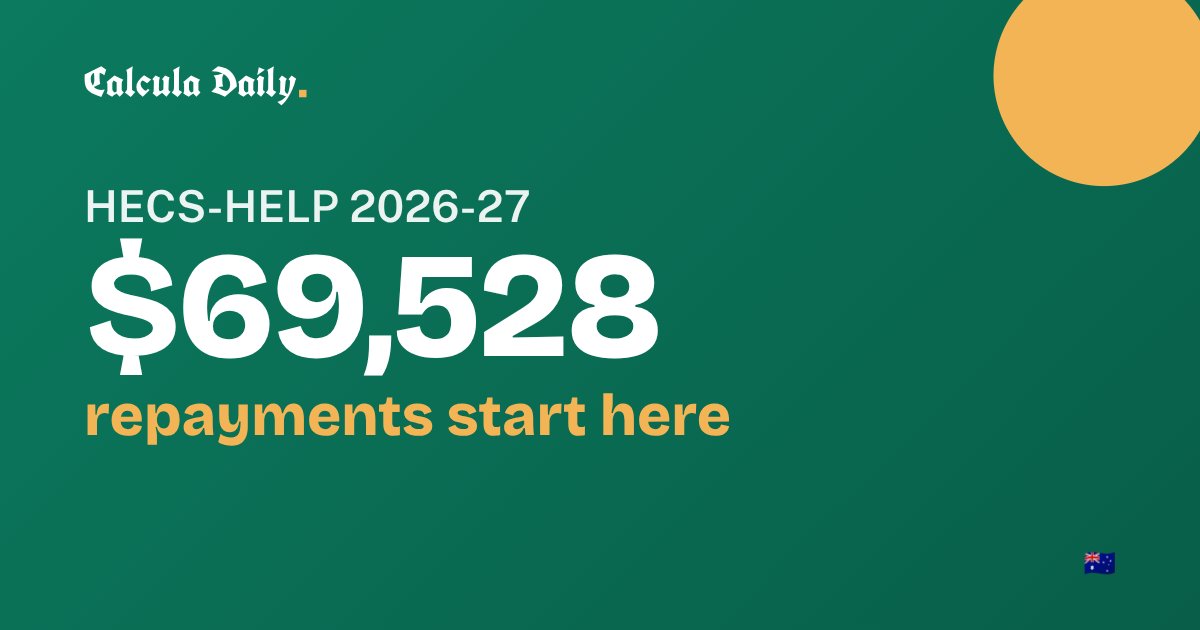
Since 2025-26, compulsory HELP repayments work like income tax brackets: you only repay on the part of your income above a threshold. For the 2026-27 income year (1 July 2026 to 30 June 2027) the threshold has been indexed to $69,528.
The 2026-27 repayment bands
- Up to $69,528: nil
- $69,529 to $129,717: 15c for each $1 over $69,528
- $129,718 to $186,050: $9,028 + 17c for each $1 over $129,717
- $186,051 and over: 10% of your total repayment income
 Read alsoPayday Super: your super now arrives every payday, and how to check it
What you repay at common incomes (2026-27)
- $70,000: about $71
- $80,000: about $1,571
- $90,000: about $3,071
- $110,000: about $6,071
- $140,000: about $10,776
These are amounts for the whole year, worked out when you lodge your tax return. Your employer withholds an estimate from each pay if you have told them you have a study loan.
Things to know
- Repayment income is more than your taxable income: it adds reportable fringe benefits, net investment losses, reportable super contributions and exempt foreign income.
- Salary sacrifice does not help: reportable super contributions are added back.
- Indexation: your balance is indexed every 1 June at the lower of CPI or the wage price index.
Enter your own repayment income and balance in the calculator below.
- Australian Taxation Office, Study and training loan repayment thresholds and rates
- Australian Taxation Office, Study and training loans – what's new
Spotted a mistake or have a question? Write to the newsroom through the contact page. We fix it and log the change at the end of the story.
Stories written with AI assistance, with every figure checked against the site calculator and the official rules cited.