
Child Benefit 2026/27: £27.05 a week for your first child, and when you have to pay it back
Child Benefit is £27.05 a week for the eldest child and £17.90 for each other child in 2026/27. How to claim, how long it lasts and how the High Income Child Benefit Charge works above £60,000.
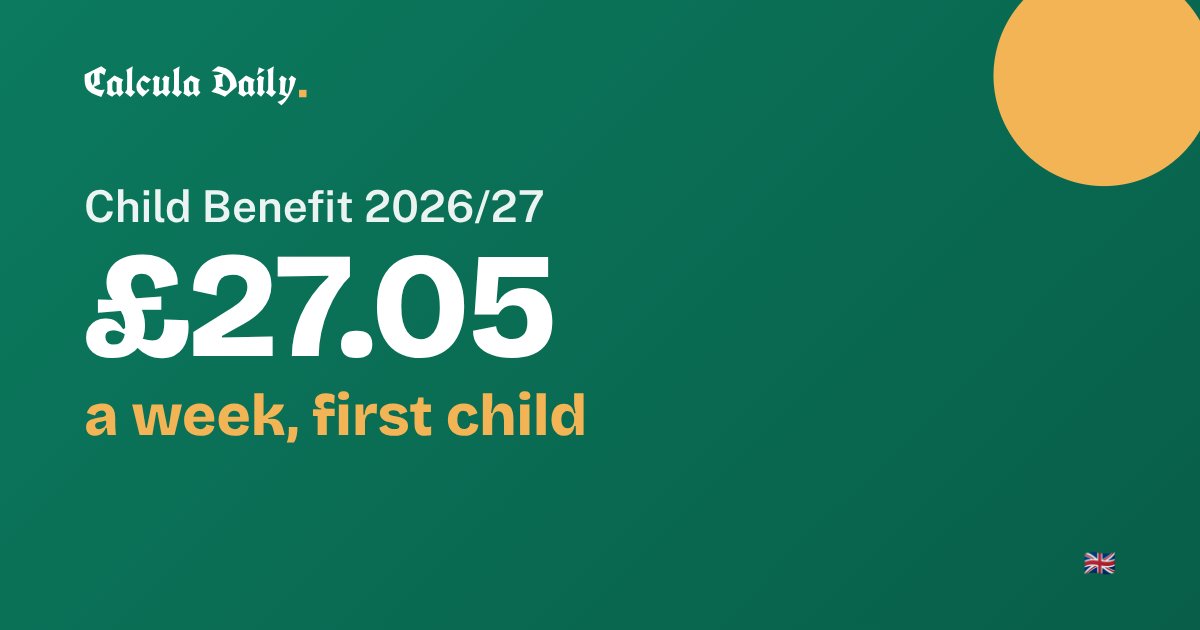
Child Benefit is paid to almost every family with children in the UK, and it is one of the few benefits that does not depend on your savings. What it does depend on is income: above £60,000, some or all of it comes back to HMRC through a tax charge. Here is how much you get in the 2026/27 tax year, how to claim and how to work out whether you will have to repay it.
How much is Child Benefit in 2026/27
The rates below apply from 6 April 2026 to 5 April 2027. There is no limit on the number of children you can claim for.
| Who | Weekly rate | Every 4 weeks | A year (52 weeks) |
|---|---|---|---|
| Eldest or only child | £27.05 | £108.20 | £1,406.60 |
| Each additional child | £17.90 | £71.60 | £930.80 |
| Two children (total) | £44.95 | £179.80 | £2,337.40 |
| Three children (total) | £62.85 | £251.40 | £3,268.20 |
In 2025/26 the rates were £26.05 and £17.25. HMRC has published provisional rates for 2027/28 of £28.00 for the eldest child and £18.55 for each other child; they are not final until confirmed.
If you are bringing up a child whose parents have died, you may also get Guardian's Allowance: £22.95 a week in 2026/27, on top of Child Benefit.
 Read alsoOff sick this winter? Statutory Sick Pay now starts on day one
Who can claim and for how long
- You can claim if you are responsible for a child under 16. Only one person can get Child Benefit for each child.
- It normally stops on 31 August on or after the child's 16th birthday.
- It can continue until the child turns 20 if they stay in approved education or training, such as A levels, Highers or certain unpaid training, start it before they turn 19 and do not claim Universal Credit. University degrees and apprenticeships do not count. You must tell HMRC that your child is staying on.
How to claim
You can claim online or with form CH2 once the birth is registered or the child comes to live with you. Claim quickly: a claim can be backdated by up to 3 months only. It is usually paid every 4 weeks into your bank account.
Claiming has two benefits beyond the money. The person claiming gets National Insurance credits, which count towards the State Pension if they are not working or earn little. And your child gets their National Insurance number automatically before they turn 16.
The High Income Child Benefit Charge
If you or your partner have an individual adjusted net income above £60,000, the higher earner pays back 1% of the Child Benefit for every £200 of income above that. At £80,000 or more, the charge equals the whole benefit. It is not based on household income: a couple earning £50,000 each pays nothing.
Adjusted net income is your total taxable income, including savings interest and dividends, after some reliefs such as pension contributions and Gift Aid. That is why paying more into a pension can reduce or remove the charge.
Examples with two children (£2,337.40 a year)
| Higher earner's adjusted net income | Share repaid | Charge | You keep |
|---|---|---|---|
| £58,000 | 0% | £0 | £2,337.40 |
| £65,000 | 25% | £584.35 | £1,753.05 |
| £70,000 | 50% | £1,168.70 | £1,168.70 |
| £75,000 | 75% | £1,753.05 | £584.35 |
| £80,000 or more | 100% | £2,337.40 | £0 |
How the £70,000 line works: £70,000 − £60,000 = £10,000. £10,000 ÷ £200 = 50, so you repay 50% of £2,337.40, which is £1,168.70. If that same person paid £5,000 more into a pension and their adjusted net income fell to £65,000, the charge would drop to £584.35.
To see what your salary takes home before any charge, use our take-home pay calculator. For an example of tax at this level, see £60,000 after tax and £70,000 after tax.
How to pay the charge
- Through PAYE: if you are employed and do not need a tax return for another reason, you can use HMRC's online service to pay the charge through your tax code.
- Through Self Assessment: if you already file a tax return (for example, because you are self-employed), or if you are paying after 31 January following the end of the tax year.
Should you opt out?
If your income is clearly above £80,000, you can choose to stop the payments instead of repaying them. You stay registered, so you still get the National Insurance credits, and your child still gets their NI number. What you should not do is skip the claim altogether: that is how parents, especially those who stay at home, lose years of State Pension credits.
Check your situation each year. A pay rise, a bonus or a new partner can push you over £60,000, and you must pay any charge owed up to the date payments stop.
- GOV.UK, Child Benefit: what you'll get
- GOV.UK, Tax credits, Child Benefit and Guardian's Allowance rates and allowances
- GOV.UK, High Income Child Benefit Charge
- GOV.UK, Child Benefit if your child is 16 to 19
- HMRC press release, Millions of families in line for Child Benefit rate increase
Spotted a mistake or have a question? Write to the newsroom through the contact page. We fix it and log the change at the end of the story.
Stories written with AI assistance, with every figure checked against the site calculator and the official rules cited.