Paycheques in 2027: CPP rate falls to 5.75%, EI rises to 1.64% and tax brackets go up 2.6%
The CRA’s 2027 payroll formulas are out. CPP takes a smaller cut of most paycheques, EI takes a little more, and federal brackets and credits are indexed by 2.6%.
The Canada Revenue Agency has published the payroll formulas employers will use from the first paycheque of January 2027. For most workers the changes roughly cancel out, but the mix is different: a smaller CPP deduction, a slightly bigger EI premium and a little less income tax thanks to indexation.
CPP: a lower rate for the first time in years
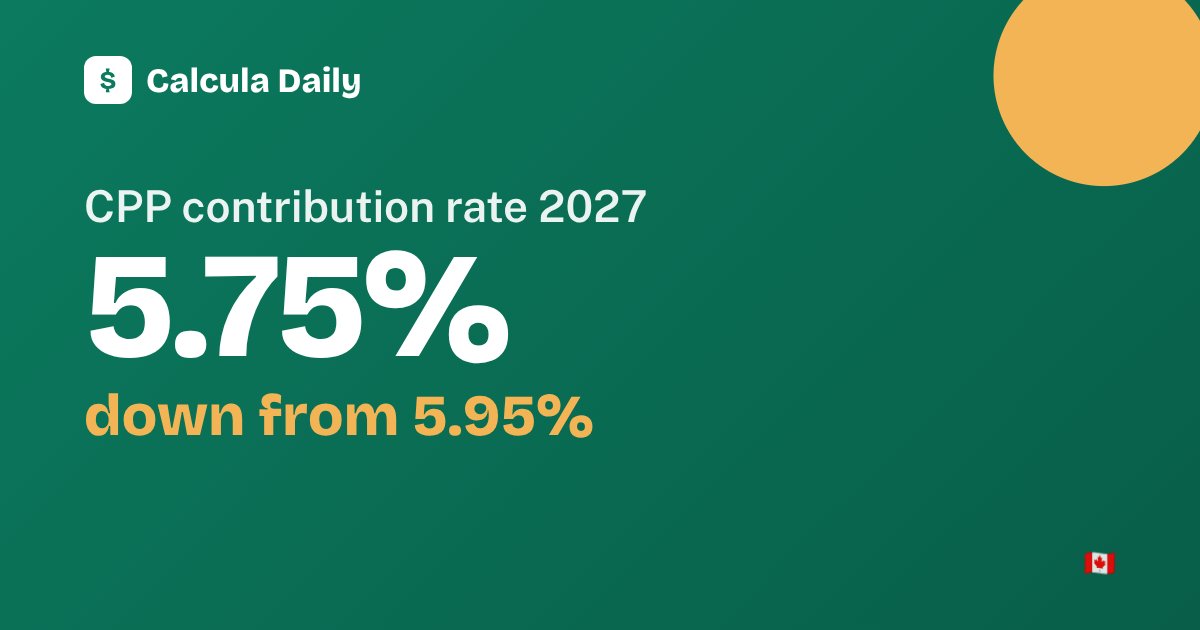
The employee CPP rate goes from 5.95% to 5.75%. The CRA’s guide says the base contribution rate decreases from 4.95% to 4.75% on January 1, 2027, while the enhanced (“first additional”) part stays at 1%.
| 2026 | 2027 | |
|---|---|---|
| Year’s maximum pensionable earnings (YMPE) | $74,600 | $76,700 |
| Basic exemption | $3,500 | $3,500 |
| Employee rate | 5.95% | 5.75% |
| Maximum CPP contribution | $4,230.45 | $4,209.00 |
| CPP2 ceiling (YAMPE) | $85,000 | $87,400 |
| Maximum CPP2 contribution (4%) | $416.00 | $428.00 |
Someone earning $60,000 pays $3,248.75 of CPP in 2027 instead of $3,361.75: about $113 less over the year. Employers match the employee rate, so they save the same amount.
 Read alsoHow much EI will I get? Employment Insurance benefits explained for 2027
EI: a cent more per $100
The employee EI premium goes from $1.63 to $1.64 per $100 of insurable earnings, and the maximum insurable earnings rise from $68,900 to $70,800. The most an employee can pay goes from $1,123.07 to $1,161.12. Workers in Quebec pay $1.29 per $100 because the province runs its own parental insurance plan.
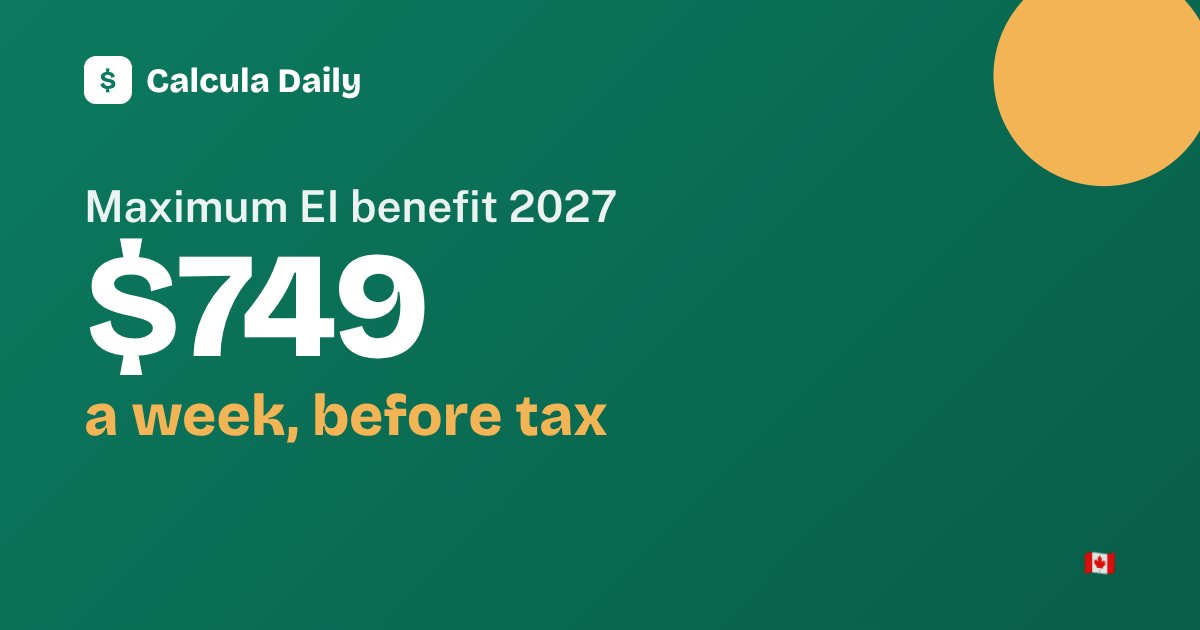
The higher earnings cap also lifts the maximum weekly EI benefit, which is 55% of the yearly maximum divided by 52: about $749 a week in 2027, up from $729.
Federal tax: brackets indexed by 2.6%
| Taxable income in 2027 | Federal rate |
|---|---|
| Up to $60,044 | 14% |
| $60,044 to $120,088 | 20.5% |
| $120,088 to $186,157 | 26% |
| $186,157 to $265,203 | 29% |
| Over $265,203 | 33% |
The basic personal amount rises to $16,879 (it is gradually reduced to $15,214 for incomes between $186,157 and $265,203), and the Canada employment amount to $1,540.
What it means for your paycheque
On a $60,000 salary in Ontario, 2027 take-home pay works out to about $47,611 a year, or $3,968 a month, after federal and Ontario tax, the Ontario Health Premium, CPP and EI. Use the calculator to see your own numbers for Ontario, British Columbia or Alberta.
Provinces also index their own brackets. British Columbia has paused indexation at 2026 levels from 2027 to 2030, so its thresholds don’t move next year.
- Canada Revenue Agency, T4127 Payroll Deductions Formulas, 124th Edition, effective January 1, 2027
- Office of the Chief Actuary (OSFI), 2027 Actuarial Report on the Employment Insurance Premium Rate
- Canada Revenue Agency, tax rates and income brackets for 2026
Spotted a mistake or have a question? Write to the newsroom through the contact page. We fix it and log the change at the end of the story.
Stories written with AI assistance, with every figure checked against the site calculator and the official rules cited.